How to dress like a gentleman- A guide on the history of the gentlman's shoe- dress like a true gent.
SHOES
HISTORY
The first form of footwear was a wrapping of skins for comfort in the Ice Age. In hot countries, the
sandal was devised thousands of years ago as protection against the burining sands. At some
distant date the skin-bag was combined with the sandal to create the first shoe.
Roman soldiers marched on an early form of hob-nailed boot, with peek-a-boo toes. The neat
solution of a laced slit was one of the lesser-known achievements of Byzantium.
The Crusades led to an exchange of ideas in footwear as in everything else, one result of which
was the appearance in the West of the pointed toe, followed in the 12th century by the high heel.
The first ‘pair’ of shoes, separately crafted to fit a right and a left foot, also dated from this period.
The pointy-toe craze persisted to ludicrous (60 cm) extremes before an inevitable reaction rendered
shoes squat, square and wider than at any time before or since. Heeled shoes made a comeback,
welcomed by horsemen who could hook them into the stirrup, but even more by Louis XIV, who
lacked height,if nothing else. Such was the Sun King’s enthusiasm that the standard curved heel is
still known as the French, or Louis, heel.
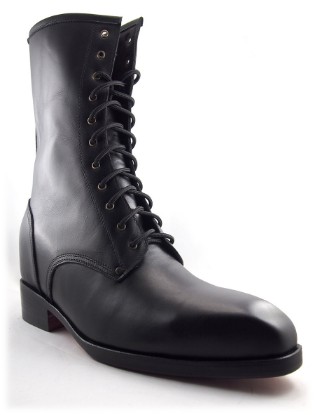
The 18th century reverberated to the thump of the cowhide jackboot (the ‘jack’ being a metal
support) , which was tamed by the dandies into civilized forms for the drawing rooms of Regency
England. The early 19th-century gentleman was consequently shod in a most warlike manner. As
well as plain top boots, he had a choice of high, tasseled Hessians, less decorative Hussar boots
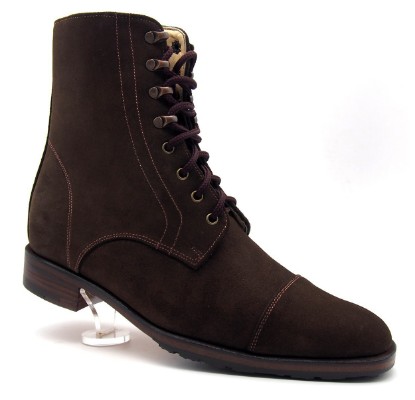
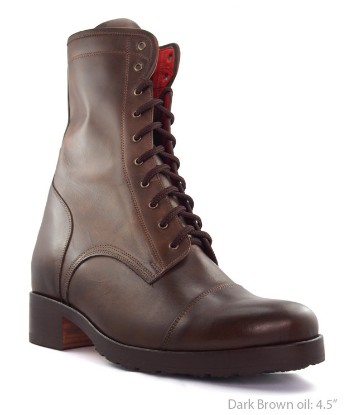
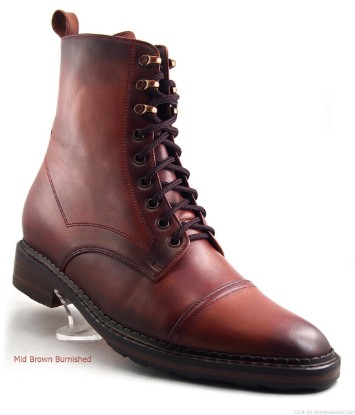
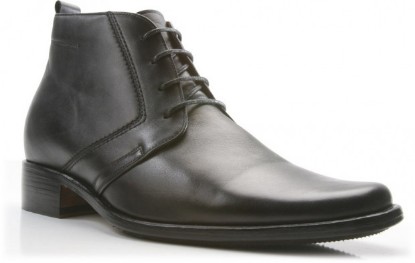
(also known as buskins) , and Bluchers, which were half-boots with open laced fronts.
The Wellington boot, a far cry from the rubber ‘Welly’ of its destiny, was made of soft leather and
designed to accommodate the new-fangled trousers. Buckles had been the major form of fastening
until the adoption of trousers, when latchets (thongs) were used, though laces gained in popularity
after the invention of the metal eyelet in 1823.
From the 1830s onwards, long boots were relegated to sport, but the half-boot in various forms
remained standard footwear throughout the 19th century, mere shoes not being deemed formal
enough for polite society. As well as Bluchers, there were side-laced Alberts and front-laced
Balmorals, named for the Prince Consort and the Scottish castle purchased by Queen Victoria in
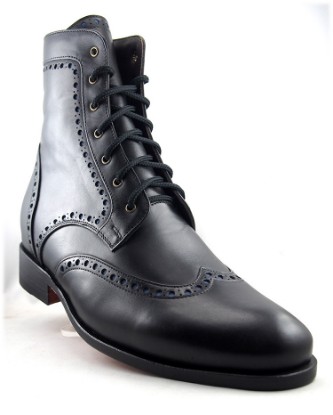
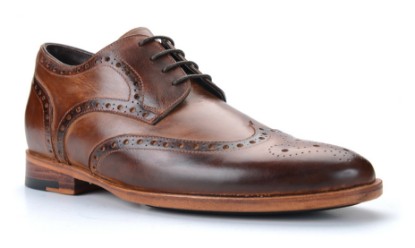
1852. The Queen’s love affair with Balmoral bore further fruit in the discovery of brogues, hefty
highland footwear of untanned leather.
The invention of the sewing machine and the development of specialized machinery brought about
the birth of the shoe industry about this time. Shoemakers were aghast. Gentlemen were
unperturbed, and continued to have their footwear made by hand.
Low-cut laced shoes of recognisably modern style made their tentative debut as something for
summer in the 1860s. A decade later, they were being worn with gaiters (spats) in wintertime by the
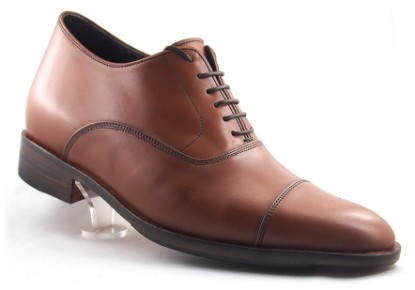
young and audacious. They came in two styles, the Oxonian, otherwise known as the Oxford, and
the Derby, but their acceptance in a strait-laced age was very gradual. It took the liberating effects
of the First World War to put the shoe back on every foot.
Along with frock coats, boots were now the preserve of the very old and the incorrigibly
conservative. In the brave new world of the lounge suit, Oxfords in plain or brogue became
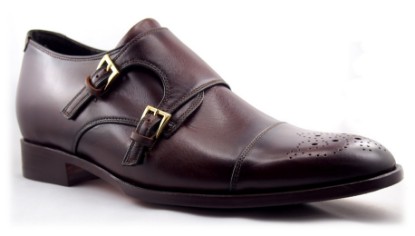
ubiquitous: so ubiquitous that the appearance in the 1930s of the Monk shoe was a welcome relief.
The Monk style brought back the buckle after a long absence, while managing to match the basic
Oxford for elegant simplicity.
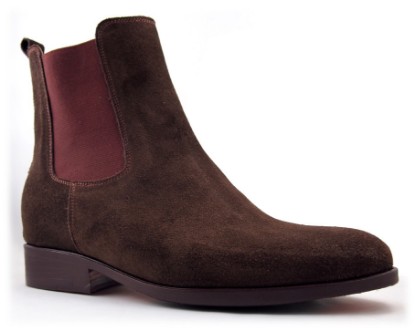
Other departures were more radical. ‘Reverse calf’ (suede) was considered to be a sign of the cad,
or worse, dangerously effeminate, until the Prince of Wales caused one of his sensations by
wearing them to America in 1924. The Prince also favoured two-toned shoes (sometimes dubbed
‘co-respondents’), another suspect style which became popular in the 1930s. Two-tones were to
remain suspect, but by the 1950s suede was perfectly ‘safe’.
The ‘Peacock Revolution’ and leisure explosion of the 1960s and beyond spawned a number of new
styles, one of which bore the hallmarks of a classic in its matching of practicality, simplicity and
elegance. The Moccasin, or Loafer, harked back to the primal origins of footwear while embodying
the functional grace of true sophistication.


Boat Deck Brougue Oxford
If you have any reservations don't hesitate to contact us via email or telephone. © 2001-2008 Don's Footwear Online. All rights reserved. Elevator shoes can increase your height Return Policy Security Contact Us Elevator shoes
|